
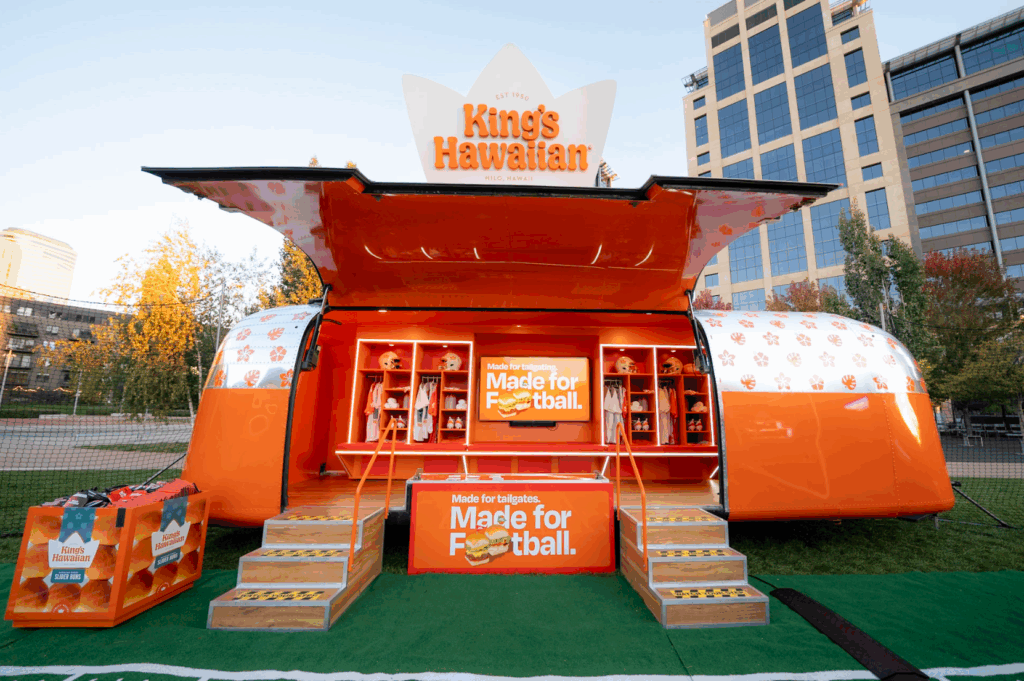
Experiential marketing events bring brands directly to consumers through mobile tours, branded pop-up retail experiences, product sampling, and customized vehicle builds. These activations work because people interact with products in person—they touch packaging, ask questions, try samples, and leave with immersive experiences they remember and share.
Experiential marketing creates recall through physical interaction. Handing someone a product sample, letting them walk through a branded space, or putting them face-to-face with something unexpected sticks in memory:
Someone who samples coffee from a glass truck remembers the taste, the conversation with the brand ambassador, and the novelty of the experiential marketing vehicle itself. That’s three memory hooks instead of one. When activations engage multiple senses—the smell of fresh product, the texture of packaging, the sound of a crowd reacting to something unexpected—each detail reinforces the others.
Start with the direct numbers: how many people stopped, how many samples went out, and how long they stayed. Mobile tracking captures impressions as vehicles move through cities—every person who saw the LED truck, every car that passed the glass box.
Lime Media measures audience engagement using impression and demographic data rather than collecting personal identifiers. This includes tracking the number of people who view activations in-person or in motion, audience composition by market, and total reach across tour stops. Lime Media provides this measurement capability across all experiential programs to help brands understand campaign exposure and effectiveness.
Social media marketing tells the rest of the story through measurable analytics. Instead of counting photos, campaigns are evaluated by total impressions, average reach per post, engagement rate, and number of user-generated content pieces created. These metrics demonstrate how activations perform online and how far campaign stories extend beyond the physical event.
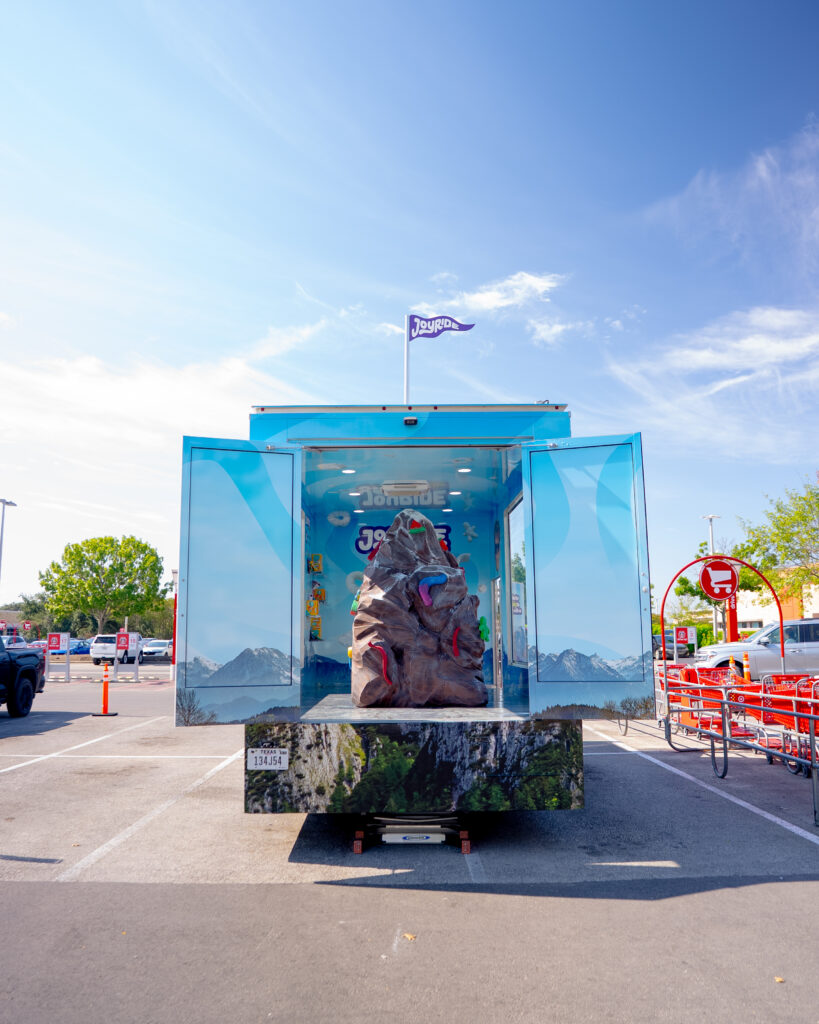
Mobile tours bring the store to the customer, rather than relying on the customer to find the store. A glass truck parks outside a concert venue. An Airstream sets up at a beach for the weekend. A branded trailer hits 30 cities in 90 days. The product goes where the people already are.
Glass box trucks turn products into moving displays with 360-degree visibility. People see what’s inside before deciding to stop:
Airstreams and custom trailers create brand environments that travel with you. The silver bullet shape is instantly recognizable, and the interior can be adapted to suit the brand’s needs—whether that’s retail space, a demo lab, or a lounge area. A tour can include as many stops as the client’s goals and budget allow, moving from parking lots to festivals to downtown plazas while maintaining a consistent brand experience at every destination.
Each trailer is custom-fabricated for the brand’s specific experience. Flooring, lighting, and product displays are integrated into the build, ensuring every stop delivers the same polished, ready-to-activate environment without additional assembly.
LED billboard trucks display full-motion video, static images, or real-time content that updates based on location and time. Custom routing and geo-targeted programming put the message where it matters:
Step vans and transit vans bring product samples directly to people. Park at a farmers market, festival, or busy intersection and hand out samples while brand ambassadors answer questions. The vehicle wraps work as advertising while stationary, then drive to the next location when foot traffic slows.
Someone who tries a sample at their local grocery store parking lot often buys the full-size product that same day. Food and beverage brands test new markets this way before committing to retail distribution. Beauty brands show customers how to apply products correctly. Interactive product demonstrations work for single-neighborhood tests or campaigns covering dozens of cities at once.
Giant drivable almonds, oversized product bottles on wheels, and cartoon characters turned into touring vehicles stop traffic and generate content people actually want to share. These builds create organic reach that paid media can’t replicate:
Festivals put brands in front of thousands of people over a single weekend. Attendees expect to see something new, which makes them more receptive to activations than they’d be walking past the same setup on a regular street corner.
Containers, modular pods, and stage trucks create branded spaces at festivals that attendees seek out for practical reasons. The setup provides utility first:
Brands partner with touring artists and theatrical productions to reach fans across multiple cities. Custom vehicles accompany the tour, setting up VIP spaces, meet-and-greet areas, or merchandise zones that align with each venue’s schedule. The asset moves from arena to arena, creating the same fan experience in every market.
Fleet and fabrication costs are quoted as a single project investment, with activations billed separately based on schedule and scope. The brand connects with audiences who are already excited about the artist, and the tour provides memorable experiences for fans. The setup works because both sides benefit—brands reach engaged audiences, and artists offer fans something beyond the standard show.
Pop-up shops create a sense of urgency that permanent stores can’t match. When a pop-up operates for only three days in a high-traffic area, people show up knowing the opportunity is limited and won’t last. Preview events let potential customers try new products before they hit retail shelves. Limited-time experiences drive immediate sales while building awareness for the larger launch.
Containers and modular builds turn parking lots and vacant storefronts into branded pop-up retail spaces. Custom flooring, lighting, and merchandising create finished environments:
Retail tours move between urban centers, suburban malls, and college campuses—adjusting merchandising and messaging for each location while maintaining brand consistency. A single trailer can be scheduled to visit multiple markets within a season, adjusting locations based on audience targets and client objectives, while maintaining consistent branding across every activation.
Pre-fabricated components and modular shelving systems cut production time from months to weeks. Vinyl wraps can be adapted to various surfaces without requiring custom fabrication for each element. Brands that need to launch fast—testing a product before competitors arrive, capitalizing on a trend, responding to market demand—can go from concept to activation in under a month.
Experiential marketing campaigns require more than just ideas—they need fabrication teams that can build them, logistics coordinators to manage their movement, and activation managers to execute them. Lime Media handles all three. With over 250 mobile assets and two decades of experience turning concepts into campaigns, we manage everything from 3D renderings to final fabrication and activation.
Ready to put your brand in front of your audience with custom mobile activations? Connect with our team to start building experiential advertising solutions.
Mobile tours travel to where audiences gather instead of waiting for them to visit fixed locations. Trailers, Airstreams, and glass trucks move between cities, setting up at festivals, retail centers, college campuses, and downtown areas to reach diverse demographics across regions.
Glass box trucks showcase products through transparent walls that let people see inside from every angle before they decide to stop. The 360-degree visibility, combined with the unusual format, creates curiosity, while the mobility brings the launch directly to high-traffic areas.
Experiential marketing campaigns capture foot traffic counts, samples distributed, time spent at activations, and impression data as vehicles move through target areas. Device ID collection enables retargeting attendees after events, while social media tracking measures organic sharing and content reach.
LED trucks display full-motion video and real-time content updates that change based on location, time of day, or campaign needs. Custom routing puts the message in front of specific audiences, while impression tracking and geo-targeted programming provide measurable results.
Step vans and transit vans are most effective for product sampling because they’re easy to drive, quick to set up, and can hold enough inventory for high-volume distribution. The wrapped exteriors advertise while stationary, then relocate to the next high-traffic area when sampling wraps up.
Experiential marketing examples include mobile product sampling tours, pop-up retail shops, glass box trucks with transparent displays, LED billboard trucks with dynamic content, branded Airstream activations, and custom 3D vehicle builds shaped like products. These campaigns foster direct consumer engagement through product trials, immersive experiences, and attention-grabbing spectacles that encourage social sharing.